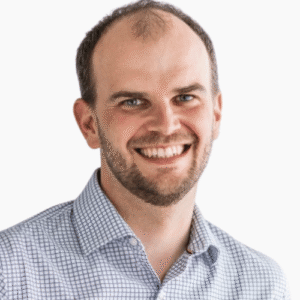
Urs Langen
Lab Head & Research Project Leader Roche
Urs Langen studied biochemistry at the University of Tübingen, Germany, before pursuing his PhD in vascular biology in the group of Prof. Ralf Adams at the Max Planck Institute in Münster, Germany. For his postdoctoral studies Urs joined the group of Prof. Chenghua Gu at Harvard Medical School in Boston, USA, where he investigated heterogeneity of the blood brain barrier in various brain areas. After completion of the postdoctoral project Urs joined Roche in Basel, Switzerland, where he has worked for 3 years as a senior scientist on drug delivery to the brain using the Roche Brainshuttle™ technology. Since 2024 Urs heads the Neurovascular Distribution Lab at Roche expanding his work on brain delivery of various drug modalities and leads multiple research projects in the dementia space. During his career Urs published numerous papers in high-impact peer-reviewed scientific journals including Nature, Nature Neuroscience and Nature Cell Biology.
I see this conference as a great opportunity to connect with leading experts from industry and academia in the field of brain delivery. I am looking forward to meaningful discussions and a fruitful exchange on what we have already achieved, what the field is currently working on and how we will overcome the next challenges.
Seminars
- Assess how bispecific constructs couple transport and therapeutic domains to enable BBB crossing while maintaining target engagement in the brain parenchyma
- Evaluate dose-dependent saturation of TfR1 transport pathways and its effect on nonlinear brain uptake
- Characterize intrabrain distribution patterns (capillary-associated vs parenchymal delivery) to assess true tissue penetration versus vascular trapping
- Compare clinical biomarker strategies (e.g. PET imaging, CSF biomarkers) for demonstrating CNS target engagement
- Which alternative BBB receptors (e.g. CD98hc, insulin receptor, LRP1, basigin) show the most promise beyond TfR1 for achieving sufficient brain uptake without compromizing safety or peripheral PK?
- How can we optimize receptor affinity, valency, and trafficking profiles to balance efficient transcytosis with minimal lysosomal degradation or target-mediated clearance?
- What preclinical models and translational biomarkers are most predictive for comparing receptor performance and de-risking clinical success across different shuttle platforms?
- How should developers prioritize receptor selection based on modality (e.g. antibodies, enzymes, oligonucleotides) and indication-specific needs for brain distribution and cellular targeting